University of Michigan · Engineering Interactive Systems course project · Jan–Apr 2023
Showing sound direction with LEDs
SoundAround: Wearable Sound Localization
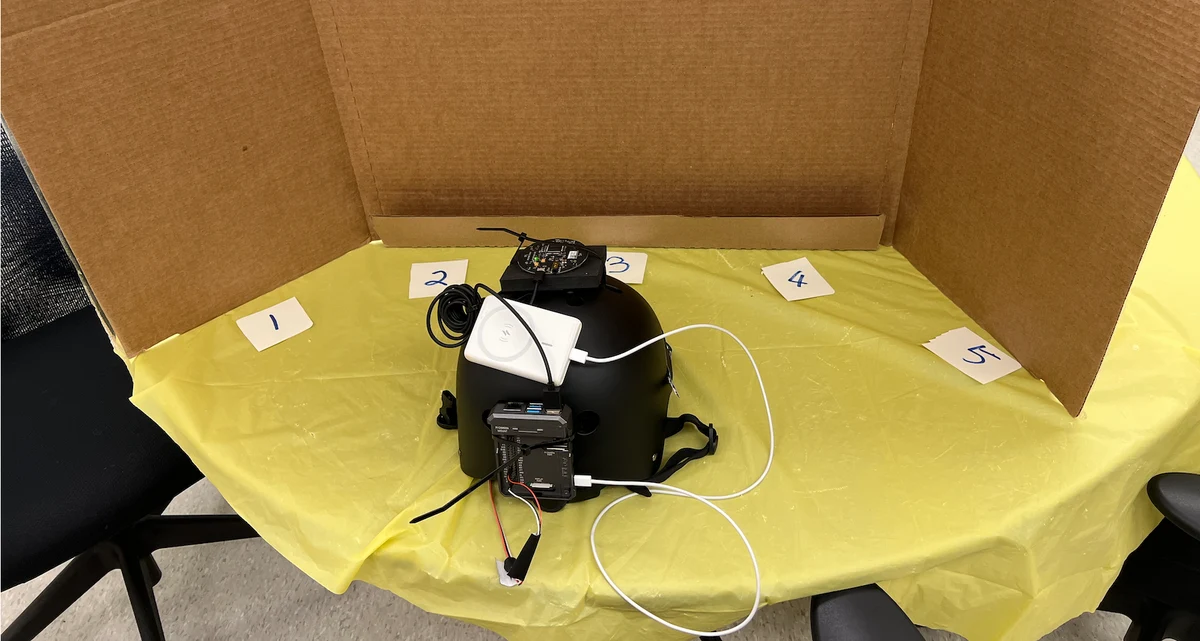
SoundAround is a wearable prototype that uses LEDs at the edge of the wearer's vision to show where a sound is coming from. A microphone array estimates the direction, and Python software chooses which lights to turn on.
I came up with the idea and worked on hardware assembly, Python software, interaction design, testing, and results analysis. I didn't lead the participant study sessions.
- participants in the final evaluation
- 5
Quiet-lab tasks with noise-cancelling headphones
- front-direction identification
- 88%
22 correct responses across 25 trials
- rear-direction identification
- 93.3%
14 of 15 trials; approximate pointing counted
Starting point
Keeping the cues in view
I proposed SoundAround with deaf and hard-of-hearing people in mind. Placing the lights in peripheral vision would let someone check a sound's direction while still looking at their surroundings.
How it came together
- 01
Read the microphone array
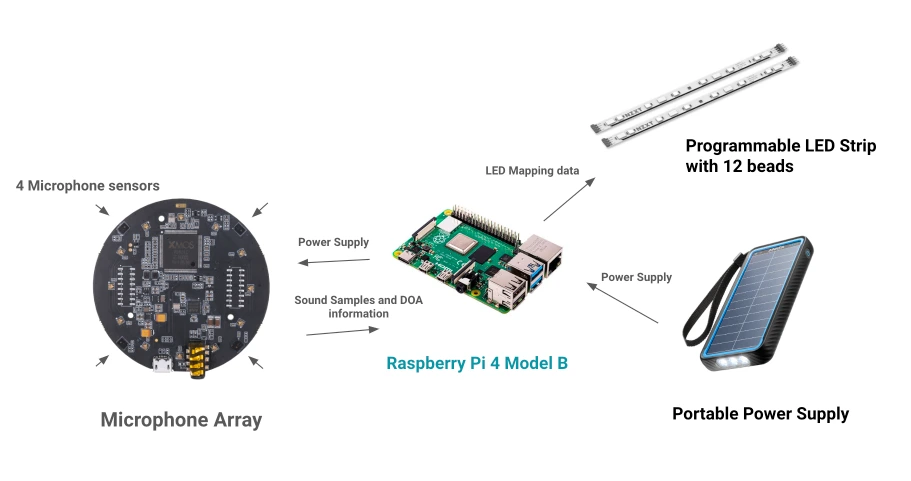
A ReSpeaker four-microphone array sends direction estimates to a Python process on a Raspberry Pi.
- 02
Choose the lights
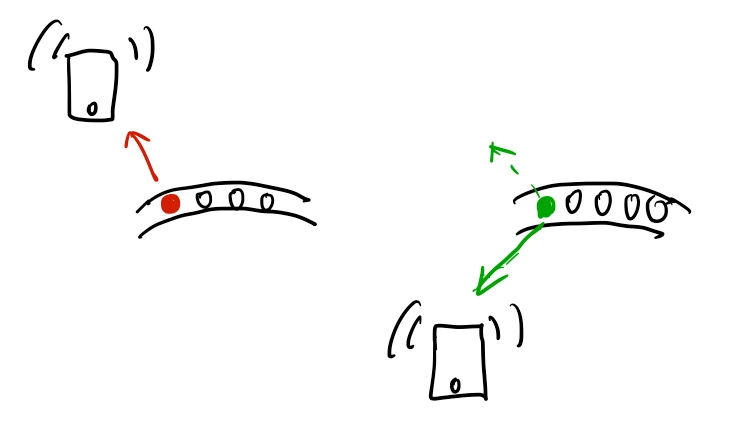
A separate display process reads those estimates and lights the corresponding LED positions. Red and green distinguish sounds in front from sounds behind the wearer.
- 03
Adjust the display
Early feedback led to changes in how directions mapped to LEDs. The revised display used lower brightness, added diffusion, and dimmer idle lights to make the cues easier to read and the device more comfortable to wear.
Background noise made the lights harder to read
Participants could read the cues in the quiet lab. Outdoors, background noise could make the lights unstable and increase the time needed to interpret them. Further work would need to address noise filtering and test the display in everyday settings.
The percentages describe how often participants identified the tested direction. They don't measure the microphone's angular accuracy. Rear trials counted pointing at or very near the target as correct.
Participants wore noise-cancelling headphones to limit what they could hear. This doesn't reproduce the experience of being deaf or hard of hearing, or establish how well the device would work for those users.
The source archive contains experimental hardware and software variants with known defects. It records the course prototype and hasn't been verified as a reproducible release.